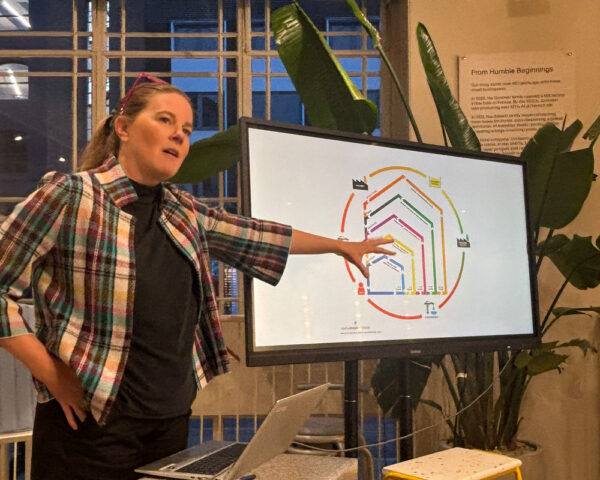
Jo Dobson reflects on the launch of Socially Successful Projects in the Built Environment and the lessons learnt from communities helping define what matters to shape the future of a place.
The latest book by Dr. Sarah Fitton and Simon Wilson, Socially Successful Projects in the Built Environment (May 2026), features Sister Manchester – not just because it produced a Social Value Strategy (many projects do, as we know) but because it challenged a more fundamental question: who defines what social value actually is?
The book explores how stakeholder engagement can shape better projects and uses Sister as an example of what can be achieved when communities help define what matters from the outset,
Situated within the University of Manchester’s former North Campus, Sister’s masterplan aims to transform the life of this historic district over the next 15-20 years. Once complete, the scheme is expected to deliver over 2 million sq. ft of commercial, innovation, and retail space alongside 1,500 new homes and nine acres of public realm.
The joint venture between The University of Manchester and Bruntwood SciTech has a vision that is rooted in heritage and the power of its community to create a vibrant new city centre destination. From the outset, the partners committed to ensuring that the new innovation district benefits local people, is integrated into the surrounding neighbourhoods, and responds to community needs both now and in the future.
Useful Projects supported the development of the Environmental and Social Impact Strategy from 2022-2025, working iteratively with the client and project teams.
Communities Defining What Matters
Too often, social value is framed by developers, consultants, and public bodies before communities are invited into the conversation. At Sister, we sought to reverse that dynamic. Working alongside Counter Context, Aurora Engagement and Bruntwood SciTech, community and youth panels were established that played an active role in shaping the Strategy.
Their role was not to validate our thinking, but to challenge it.
Importantly, the Community Panel continues to meet today and remains influential in the ongoing development.
A key part of the approach at Sister was rethinking stakeholder mapping itself. Rather than focusing primarily on those with the greatest influence and interest, we sought to understand who could experience the greatest social value and influence on the project. That work became the foundation for both panel membership and the delivery strategies that followed.
The Renold Building, a former teaching building, has since been transformed into the Renold Innovation Hub; the first building to open within Sister. The panels played a key role in shaping what the building became:
- An early “meanwhile” community asset rather than a vacant building awaiting redevelopment.
- A place with publicly accessible spaces and events.
- A testbed for skills, employment, and entrepreneurship opportunities for local people and young people.
- A venue that could host community organisations and youth-sector activities alongside innovation businesses.
Having supported the development of the Strategy, I visited the Hub in April to see how it was evolving and was struck by what a thriving environment it has already become. Seeing the space in use reinforced the importance of involving communities in defining what matters from the outset.
Key Takeaways
Socially Successful Projects in the Built Environment reinforces two things that we have learned repeatedly through our work:
- Professionals rarely have a complete understanding of what matters most to local people.
- Communities bring knowledge and perspectives that cannot be captured through data alone.
As the built environment sector continues to mature its understanding of social value, the opportunity lies not simply in measuring outcomes, but in involving communities in deciding what matters in the first place. Sister shows what can happen when communities are treated as partners in shaping the future of a place rather than stakeholders to be consulted.
Read more about demystifying social value and stakeholder engagement here.