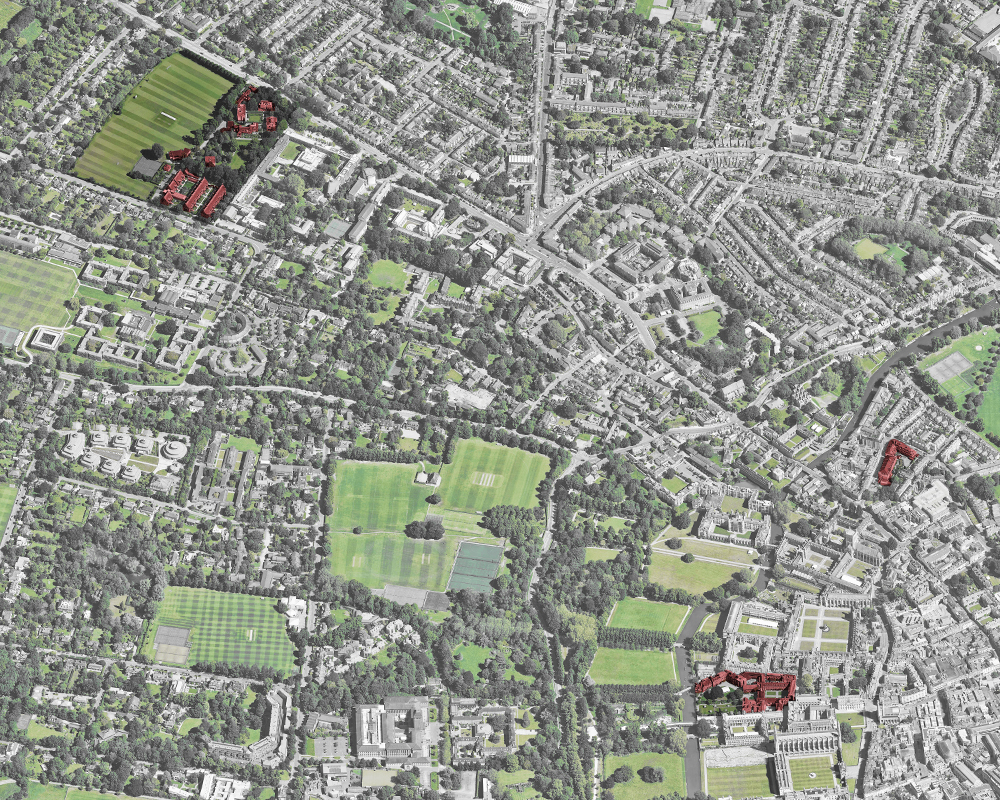
Useful Project’s Sustainability Masterplanning team supported the design team to develop the Decarbonisation Strategy for the historic College Estate, founded in 1350. By aligning with the wider masterplan, the strategy sets a pathway to achieve net zero carbon by 2040. Detailed analysis of energy use and carbon underpinned a six-point plan to transition away from gas and enhance building performance.
Working within the constraints of a live university campus, conventional decarbonisation processes were reimagined by carrying out extensive fabric upgrades first. The phased strategy focused on achievable early actions, targeting practical, low-cost interventions that deliver immediate carbon savings while enabling long-term transformation.
The first phase prioritised optimisation of existing energy control systems and a complete lighting replacement, delivering instant reductions in energy demand and operational carbon. Suitable roof spaces were then identified for solar PV installations to maximise renewable generation and reduce dependency on the grid.
Enhancing energy performance
The six-point plan outlined opportunities to achieve best-in-class energy performance when upgrading or replacing buildings within the masterplan. Heat pumps were introduced as part of a managed transition to electrified heating, designed to operate alongside existing gas systems until full replacement becomes viable following fabric enhancements. This ensured continuity of service while progressing steadily toward full electrification.
To ensure the Decarbonisation Strategy was integrated with wider environmental and sustainability goals, structural and construction insights demonstrated how modern sustainable systems could be sensitively incorporated into the College’s historic fabric, balancing performance with preservation.
The result is a clear, evidence-based pathway to achieve near-zero carbon, defining measurable reduction targets for each site, and supporting informed decision-making and long-term investment planning to align sustainability, functionality, and heritage value.
Images courtesy of Haworth Tompkins


